What to Wear Based on Weather: Stop Guessing, Start Dressing Smart
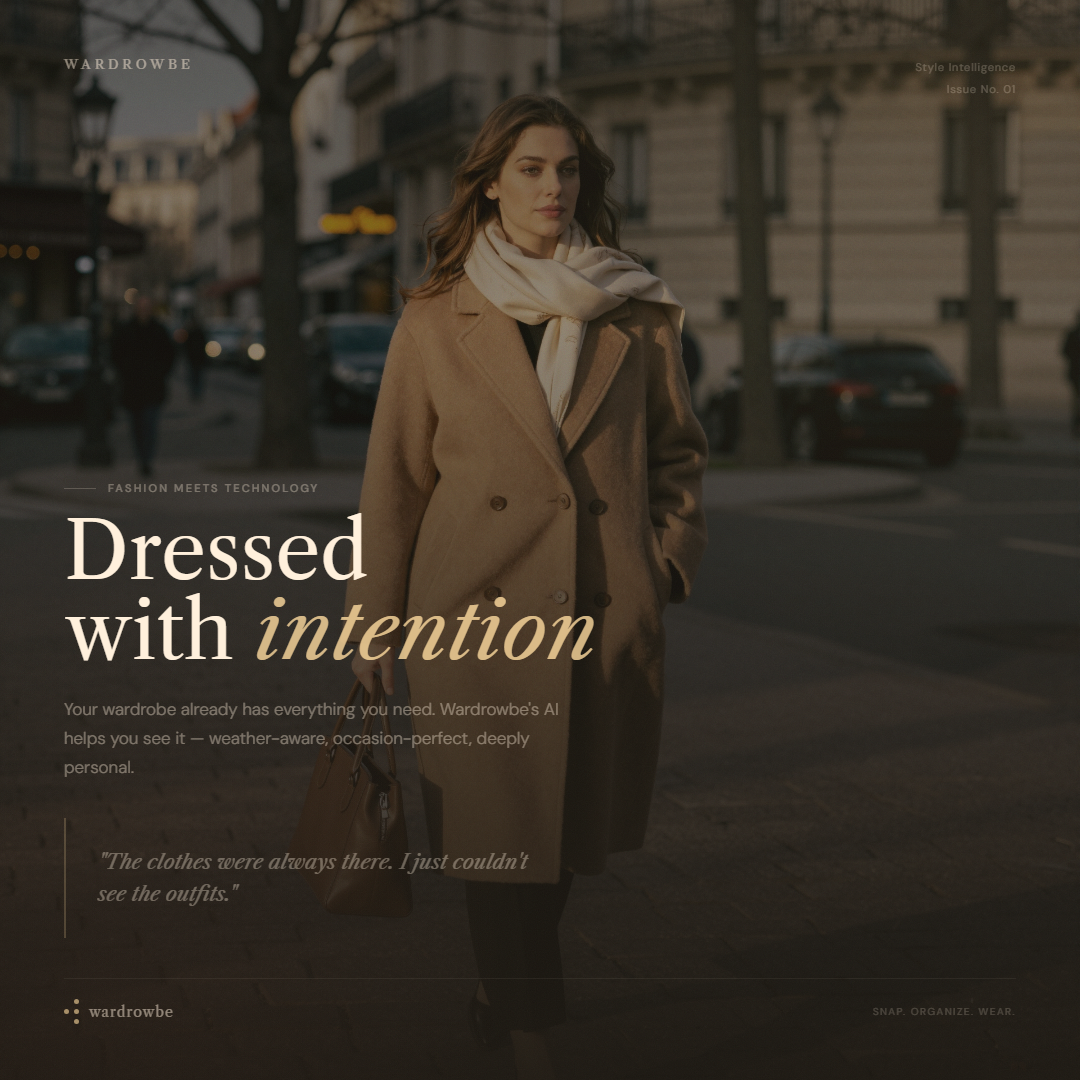
You check the forecast. It says 58°F and partly cloudy. What does that actually mean for your outfit?
A light jacket? A sweater? Is it windy enough for layers? Will it rain by afternoon? And more importantly — which of your clothes works for those conditions?
This is the gap between knowing the weather and knowing what to wear. Most people bridge it with guesswork. There's a better way.
Why the Forecast Alone Isn't Enough
Weather apps tell you numbers: temperature, humidity, wind speed, precipitation chance. But clothing decisions depend on context that numbers alone don't capture:
- 58°F in San Francisco feels different than 58°F in Austin (humidity matters)
- Morning commute at 45°F needs different layers than afternoon errands at 45°F with sun
- "30% chance of rain" — do you bring an umbrella? A waterproof jacket? Neither?
- Wind chill can make a mild day feel 10-15 degrees colder
Then there's the personal variable: your actual wardrobe. Generic advice like "wear a light jacket" assumes you own one. Real outfit planning has to work with what's in your closet, not what's in a catalog.
How Weather-Based Outfit Planning Works
Smart outfit planning combines three things: your local weather forecast, your actual wardrobe, and a matching algorithm that understands clothing properties.
Step 1: Understand the clothes
Every clothing item has functional properties beyond its appearance:
| Property | Why it matters for weather | |----------|--------------------------| | Fabric weight | Determines warmth — cotton tee vs. wool sweater | | Layering potential | Can it go over or under other pieces? | | Water resistance | Critical for rain days | | Breathability | Prevents overheating in humidity | | Coverage | Long sleeves vs. short, ankle vs. cropped | | Formality | A rain jacket works; a garbage bag doesn't |
When you photograph clothes for an AI wardrobe app, the vision model detects these properties automatically. A cable-knit sweater gets tagged differently than a linen button-down — not just by appearance, but by functional warmth category.
Step 2: Read the forecast intelligently
A good weather-based system doesn't just look at the current temperature. It considers:
- Temperature range for the hours you'll be outside (not just the daily high/low)
- Precipitation probability and type — drizzle vs. downpour vs. snow
- Wind speed and direction — wind chill makes 50°F feel like 40°F
- Humidity — high humidity at 75°F means breathable fabrics, not layers
- UV index — relevant for hats and sun protection
- Condition changes — morning fog burning off to afternoon sun
Step 3: Match clothes to conditions
This is where most "what to wear" apps stop at generic suggestions like "wear a jacket." A system that knows your wardrobe can be specific:
Instead of: "Wear a warm layer"
You get: "Your navy merino crew neck + the grey chore coat. Bring the black umbrella — rain picks up after 2pm."
The difference is actionable specificity. You're not interpreting advice; you're picking from a curated shortlist of your own clothes.
Temperature Ranges and What They Mean
Here's a practical reference for dressing by temperature, adjusted for activity level (assuming walking/commuting, not exercising):
Above 80°F (27°C) — Hot
Breathable fabrics only. Light colors reflect heat. Linen, cotton, moisture-wicking synthetics. Minimal layering.
65-80°F (18-27°C) — Warm
T-shirts, light blouses, shorts or light pants. A light layer for air-conditioned spaces. This is the easiest range.
50-65°F (10-18°C) — Mild
The tricky zone. Too warm for a winter coat, too cool for just a shirt. This is where layering matters most: a base layer + a medium-weight jacket or cardigan. Check wind — it makes a big difference here.
35-50°F (2-10°C) — Cool
Proper jacket territory. Heavier knits, lined jackets, scarves. Closed-toe shoes. Layering is essential because indoor spaces will be heated.
Below 35°F (2°C) — Cold
Heavy coats, insulated layers, hats, gloves. Prioritize wind protection and waterproofing. Multiple thin layers beat one thick one for temperature regulation.
The Layering System
The military and outdoor industry figured out layering decades ago. The same principles work for everyday clothing:
Base layer — sits against your skin. Manages moisture. T-shirts, undershirts, thermal tops.
Mid layer — provides insulation. Sweaters, fleeces, light down jackets. This is what you adjust most based on temperature.
Outer layer — protects from wind and rain. Jackets, coats, parkas. Should be removable when you go indoors.
The key insight: removing a mid layer adapts you to a 15-20°F range. A morning commute at 45°F with all three layers becomes a lunchtime walk at 60°F by unzipping the outer and removing the mid.
AI wardrobe apps that understand layering will suggest outfits as systems, not individual items. The suggestion isn't "wear this jacket" — it's "this base + mid + outer combination covers your whole day."
Common Weather-Dressing Mistakes
Dressing for the daily high, not the morning low. If you leave at 7am and it's 42°F, it doesn't matter that it'll hit 65°F by noon. Dress for your departure and remove layers later.
Ignoring humidity. 75°F at 30% humidity (desert) feels completely different from 75°F at 85% humidity (Gulf Coast). High humidity means even light layers feel suffocating. Choose loose, breathable fabrics.
Overdressing for rain. A 20% chance of light rain doesn't warrant a full rain suit. A water-resistant jacket or a compact umbrella handles most situations. Save the heavy waterproofing for 70%+ probability or extended outdoor time.
Forgetting about indoor conditions. You'll spend most of your day indoors. Offices run 68-72°F year-round. If your winter outfit is perfect for -10°F, you'll overheat at your desk. Removable layers solve this.
Not checking the wind. Temperature and wind chill can differ by 15°F or more. A calm 50°F day is pleasant in a light jacket. A 50°F day with 25mph gusts needs a windbreaker.
Building a Weather-Ready Wardrobe
You don't need hundreds of clothes to dress well for any weather. You need the right pieces:
Must-haves for weather versatility:
- 2-3 base layers in different weights (tee, long-sleeve, thermal)
- 2 mid layers (light sweater + heavier knit or fleece)
- A water-resistant outer layer
- A warm winter coat (if your climate requires one)
- One pair of waterproof or water-resistant shoes
Nice-to-haves:
- A packable rain jacket that fits in a bag
- A wind-resistant vest (great for the 50-65°F zone)
- Moisture-wicking fabrics for humid climates
The point isn't to buy more clothes. It's to know what you already have and how it maps to weather conditions. This is where digitizing your wardrobe pays off — you can see at a glance whether your closet has gaps.
How Wardrowbe Handles Weather
Wardrowbe checks your local weather each morning using Open-Meteo (free, no API key required) and factors it into outfit suggestions:
- Pulls the forecast for your location — temperature, wind, precipitation, humidity
- Matches against your wardrobe — knows which of your items are warm, breathable, waterproof, etc.
- Suggests complete outfits — not just "wear a jacket" but specific items from your closet that work together
- Learns from feedback — skip a suggestion and it adjusts. Wear it and rate it, and it gets smarter over time
The system works whether you self-host (free, using local AI via Ollama) or use the cloud version. Your weather data comes from Open-Meteo either way — no tracking, no data selling.
Getting Started
If checking the weather and staring at your closet is a daily frustration:
- Self-host Wardrowbe — free, runs on Docker, uses your own AI model
- Try the cloud version — 7-day free trial, zero setup, managed AI tagging
Photograph your wardrobe once. After that, daily outfit suggestions arrive automatically — matched to your clothes, your weather, and your style.